
The Book of Numbers is the fourth book of the Hebrew Bible (Christian Old Testament), and the fourth of five books of the Jewish Torah (the Law, Pentateuch). Numbers is primarily about the wanderings in the wilderness of the Hebrew people as a result of their lack of faith in God.
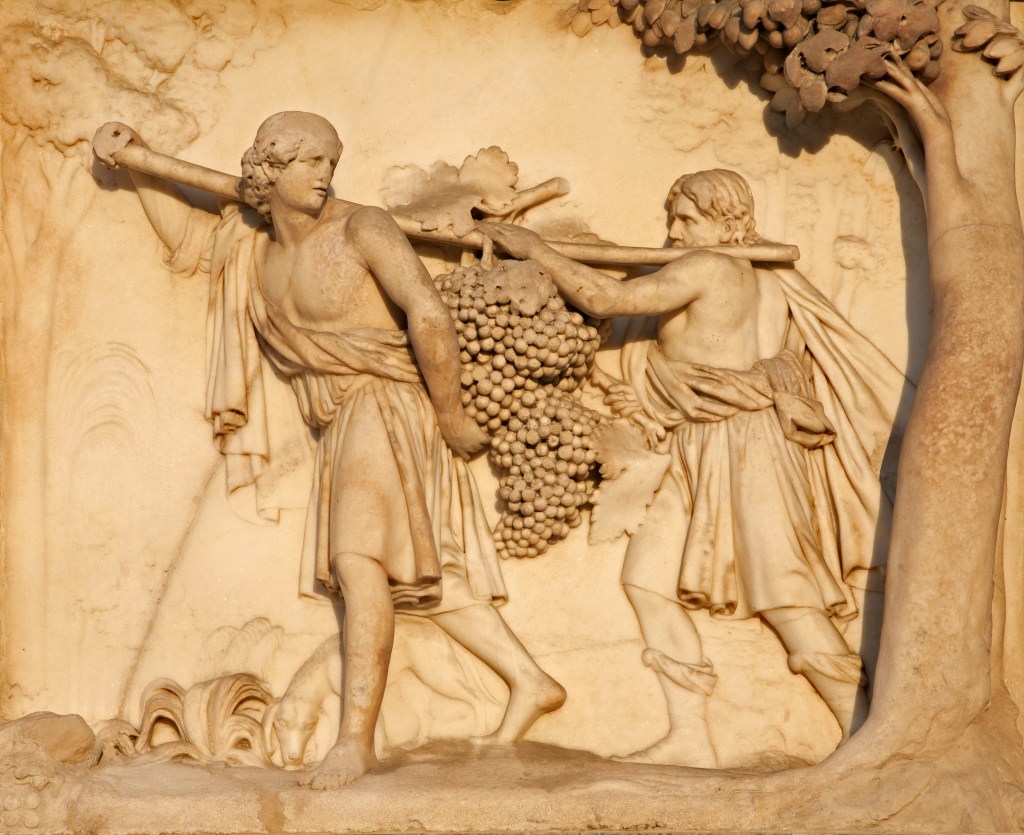
There are two important narratives of distrust and disobedience. The first is the story of the 12 spies that went into the land of Canaan for 40 days to suss it out. All of the spies said that it was a good land, flowing with milk and honey. However, there were giants in the land, as well. Two of the spies, Joshua and Caleb, urged the people to go in and conquer the land, assuring them that God would give them the victory. Ten of the spies were afraid and convinced the people not to go in. As a result, God pronounced that they would wander in the wilderness for 40 years and all of that generation would all die in the wilderness (except Joshua and Caleb) and would not see the Promised Land because they did not trust God.
The other important disobedient act was committed by Moses of all people. God told him to command the rock to yield its water but Moses struck the rock with his stick instead. As a result, God would not let Moses enter the Promised Land. He eventually did get to see it, but did not get to enter.
Paul says in 1 Corinthians 10:11: “These things happened to them as examples and were written down as warnings for us, on whom the culmination of the ages has come.”
Key Facts About the Book of Numbers
- Author: Moses (traditionally)
- Date Written: c. 1445 BC – 1400 BC
- Location: Borders of Canaan
- Theme: Census, History, and Disobedience
High-Level Outline of Numbers
- In the wilderness of Sinai
- The first census (1)
- Organization of the camp and marching order (2)
- Responsibilities and census of the Levitical tribes (3-4)
- Unclean persons, restitution for wrongs, unfaithfulness (5)
- The Nazarites and the priestly benediction (6)
- Offerings of tribal leaders and voice of God above the mercy seat (7)
- The lampstand and consecration of the Levites (8)
- Passover is celebrated (9)
- Departure from Sinai
- Silver trumpets and leaving Sinai (10)
- People complained of their misfortunes in the desert (11)
- Aaron and Miriam are jealous if Moses (12)
- Spies sent into Canaan, the people rebel = 40 years wandering (13-14)
- Wandering in the wilderness
- Offerings, sabbath violations and garments (15)
- Korah’s revolt (16)
- Budding of Aaron’s rod (17)
- Priests, Levites and the red heifer (18-19)
- Miriam dies, Moses strikes the rock, Edom refuses passage, Aaron dies (20)
- Death of Aaron, the bronze serpent, Kings Sihon and Og defeated (21)
- Balaam and the donkey (22-24)
- Israelites commit idolatry by worshipping Baal of Peor (25)
- Another census (26)
- Daughters of Zelophehad inherit and Joshua appointed Moses’ successor (27)
- Offerings and festivals, vows of men and women (30)
- Israel begins the conquest of the Promised Land
- Israel wars against Midian and disposition of booty (31)
- Israel conquers the land west of the Jordan River (32)
- Review of the stages of Israel’s journey from Egypt (33)
- God gives Moses boundaries of the Promised Land (34)
- Levites given cities to live in and cities of refuge (35)
- Specifications for marriage of female heirs (36)
Key Verses in Numbers
Numbers 6:24-26 – The priestly blessing: 24“The Lord bless you and keep you; 25 the Lord make his face to shine upon you and be gracious to you; 26 the Lord lift up his countenance upon you and give you peace.”
Numbers 12:6-8: “When a prophet of the LORD is among you, I reveal myself to him in visions, I speak to him in dreams. But this is not true of my servant Moses; he is faithful in all my house. With him I speak face to face, clearly and not in riddles; he sees the form of the LORD. Why then were you not afraid to speak against my servant Moses?”
Numbers 14:18: “The Lord is slow to anger and abounding in steadfast love, forgiving iniquity and transgression, but by no means clearing the guilty, visiting the iniquity of the parents upon the children to the third and the fourth generation.”
Numbers 14:30-34: “Not one of you will enter the land I swore with uplifted hand to make your home, except Caleb son of Jephunneh and Joshua son of Nun. As for your children that you said would be taken as plunder, I will bring them in to enjoy the land you have rejected. But you — your bodies will fall in this desert. Your children will be shepherds here for forty years, suffering for your unfaithfulness, until the last of your bodies lies in the desert. For forty years — one year for each of the forty days you explored the land — you will suffer for your sins and know what it is like to have me against you.”
Notes
Second quail story: Back in Exodus 16, we read that God gave the people manna from heaven in the morning and quail in the evening. Then in Numbers 11, the people complain because they have no meat to eat and the narrative of how God gives them quail is quite detailed. What’s the deal? This article on The Torah website provides some interesting alternative answers to why there is a double quail narrative from various famous rabbis through the centuries. The one the author favors (and so do I) is one from Rabbi Bekhor Shor who says that manna was given in Exodus, but not the quail. However, since Moses was discussing the manna, he mentioned the quail, as well. Here’s the commentary if you are interested in the alternative explanations: https://www.thetorah.com/article/the-double-quail-narratives-and-bekhor-shors-innovative-reading.

 A Pilgrim's Journey