Weekly Highlights

Week 6: Leviticus 19 – Numbers 12

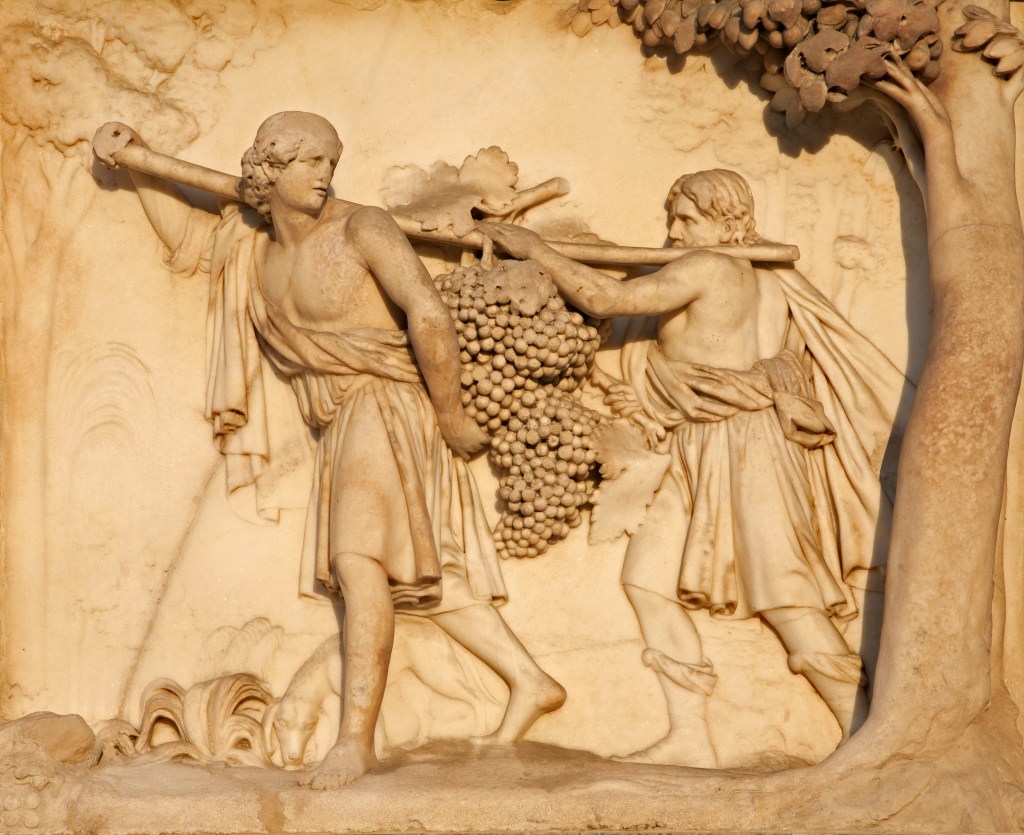
Lots of ceremonial and interpersonal relationship instructions this week.  Once again, there is complaining, disobedience, jealousy – all the usual human reactions when we humans don’t get what we want. The people make progress toward the Promised Land and are on the edge of Canaan but the end of this week’s reading.

Key people this week:

  • Moses
  • Aaron and Miriam
  • The tribal leaders

Key events this week:

Leviticus

  • The Lord gives instructions for ceremonial holiness and also more specific instructions on how to love one’s neighbor as oneself.
  • Penalties for transgressions are listed.
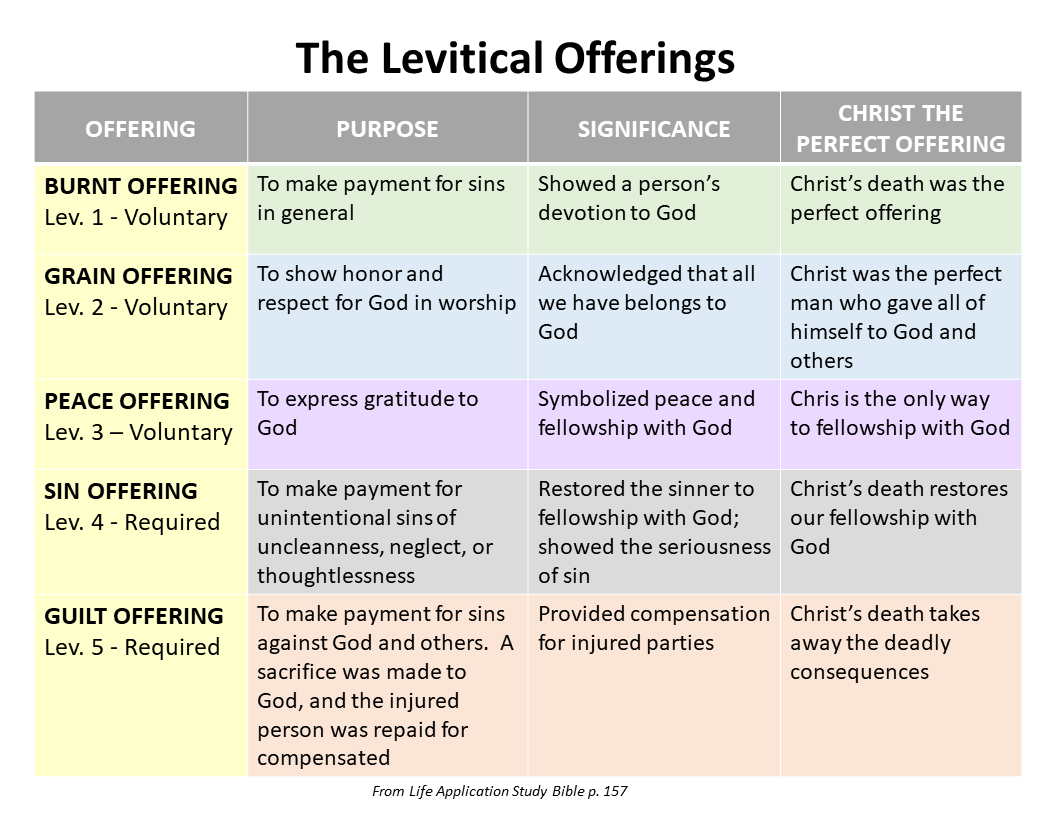
  • God gives instructions on the use and acceptability of offerings
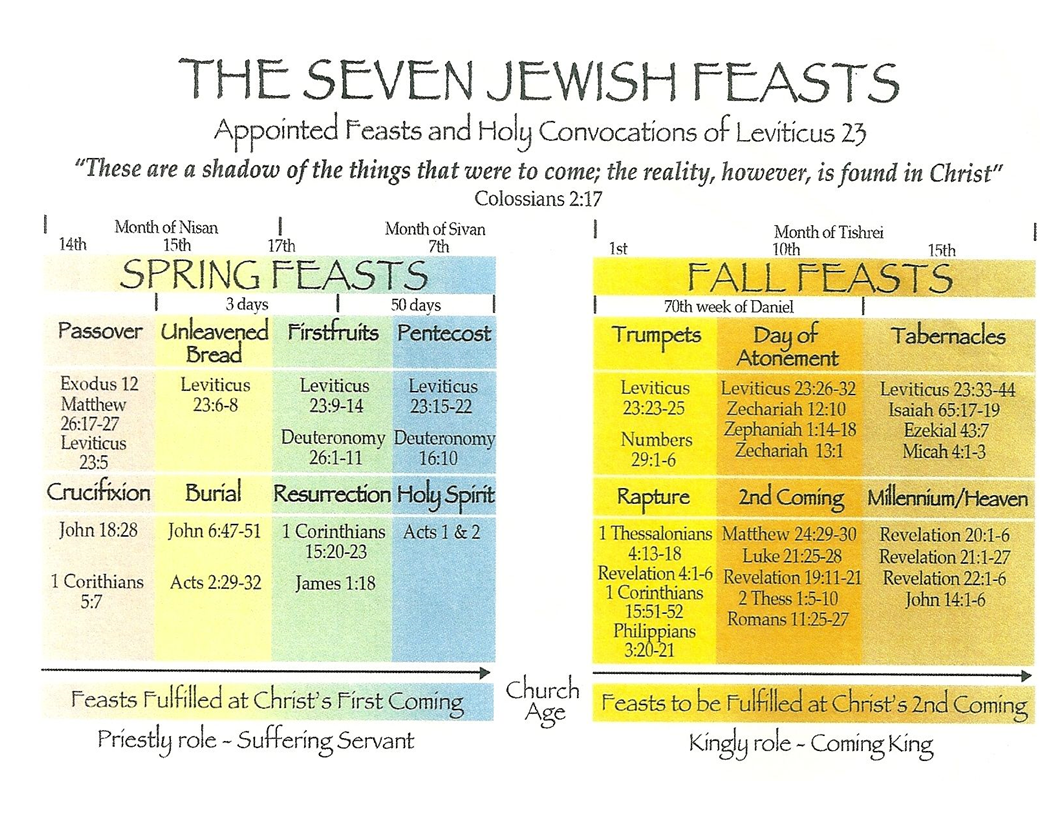
  • God gives instructions on the festivals and the lamp and bread for the tabernacle:
    • Sabbath, Passover, Unleavened Bread
    • First Fruits
    • Festival of Weeks
    • Festival of Trumpets
    • Day of Atonement
    • Festival of Booths.
  • Blasphemy and its punishment are outlined.
  • God gives instructions for a sabbatical year in which the land rests.
  • The Year of Jubilee (50th year) is described.
  • God warns the people against idolatry and lists rewards for obedience and penalties for disobedience (these are repeated in greater detail in Deuteronomy 28).
  • Vows and their attendant offerings are described.

Numbers

  • First census is taken.
  • The people are told how to arrange themselves when in camp and the order they are to proceed when they depart.
  • Instructions for the Levites are provided as well as instructions for unclean persons, making restitution, unfaithful wives.
  • Requirements of nazarites (men who separate themselves for the Lord for a time) are listed.
  • Tribal leaders present offerings for the tabernacle.
  • God gives instructions for the consecration of the Levites.
  • The Israelites celebrate Passover at Sinai.
  • The cloud and fire over the tabernacle indicate when the people are to stay and when they are to leave.
  • God gives Moses instructions to make two silver trumpets and how they are to be used.
  • The Israelites leave Sinai and set off for Canaan.
  • The people complain about their misfortunes in the wilderness, remember a rose-colored view of life in Egypt, and crave meat – thus angering the Lord.
  • Aaron and Miriam become jealous of Moses but God sets them straight.

Special Notes

Priestly blessing.  The Lord himself gives the priestly blessing to Aaron to speak over the Israelites:  “The Lord bless you and keep you; the Lord make his face to shine upon you and be gracious to you; the Lord lift up his countenance upon you and give you peace.”  What a precious gift!

Books of the Bible Overviews

Book of Numbers Overview

The Book of Numbers is the fourth book of the Hebrew Bible (Christian Old Testament), and the fourth of five books of the Jewish Torah (the Law, Pentateuch).  Numbers is primarily about the wanderings in the wilderness of the Hebrew people as a result of their lack of faith in God. 

There are two important narratives of distrust and disobedience.  The first is the story of the 12 spies that went into the land of Canaan for 40 days to suss it out.   All of the spies said that it was a good land, flowing with milk and honey.  However, there were giants in the land, as well.  Two of the spies, Joshua and Caleb, urged the people to go in and conquer the land, assuring them that God would give them the victory.  Ten of the spies were afraid and convinced the people not to go in.  As a result, God pronounced that they would wander in the wilderness for 40 years and all of that generation would all die in the wilderness (except Joshua and Caleb) and would not see the Promised Land because they did not trust God.  

The other important disobedient act was committed by Moses of all people.  God told him to command the rock to yield its water but Moses struck the rock with his stick instead.  As a result, God would not let Moses enter the Promised Land.  He eventually did get to see it, but did not get to enter.

Paul says in 1 Corinthians 10:11:  “These things happened to them as examples and were written down as warnings for us, on whom the culmination of the ages has come.”

Key Facts About the Book of Numbers

  • Author: Moses (traditionally)
  • Date Written:  c. 1445 BC – 1400 BC
  • Location:  Borders of Canaan
  • Theme:  Census, History, and Disobedience

High-Level Outline of Numbers

  1. In the wilderness of Sinai
    1. The first census (1)
    1. Organization of the camp and marching order (2)
    1. Responsibilities and census of the Levitical tribes (3-4)
    1. Unclean persons, restitution for wrongs, unfaithfulness (5)
    1. The Nazarites and the priestly benediction (6)
    1. Offerings of tribal leaders and voice of God above the mercy seat (7)
    1. The lampstand and consecration of the Levites (8)
    1. Passover is celebrated (9)
  2. Departure from Sinai
    1. Silver trumpets and leaving Sinai (10)
    1. People complained of their misfortunes in the desert (11)
    1. Aaron and Miriam are jealous if Moses (12)
    1. Spies sent into Canaan, the people rebel = 40 years wandering (13-14)
  3. Wandering in the wilderness
    1. Offerings, sabbath violations and garments (15)
    1. Korah’s revolt (16)
    1. Budding of Aaron’s rod (17)
    1. Priests, Levites and the red heifer (18-19)
    1. Miriam dies, Moses strikes the rock, Edom refuses passage, Aaron dies (20)
    1. Death of Aaron, the bronze serpent, Kings Sihon and Og defeated (21)
    1. Balaam and the donkey (22-24)
    1. Israelites commit idolatry by worshipping Baal of Peor (25)
    1. Another census (26)
    1. Daughters of Zelophehad inherit and Joshua appointed Moses’ successor (27)
    1. Offerings and festivals, vows of men and women (30)
  4. Israel begins the conquest of the Promised Land
    1. Israel wars against Midian and disposition of booty (31)
    1. Israel conquers the land west of the Jordan River (32)
    1. Review of the stages of Israel’s journey from Egypt (33)
    1. God gives Moses boundaries of the Promised Land (34)
    1. Levites given cities to live in and cities of refuge (35)
    1. Specifications for marriage of female heirs (36)

Key Verses in Numbers

Numbers 6:24-26 – The priestly blessing:  24“The Lord bless you and keep you; 25 the Lord make his face to shine upon you and be gracious to you; 26 the Lord lift up his countenance upon you and give you peace.”

Numbers 12:6-8:  “When a prophet of the LORD is among you, I reveal myself to him in visions, I speak to him in dreams. But this is not true of my servant Moses; he is faithful in all my house. With him I speak face to face, clearly and not in riddles; he sees the form of the LORD. Why then were you not afraid to speak against my servant Moses?”

Numbers 14:18“The Lord is slow to anger and abounding in steadfast love, forgiving iniquity and transgression, but by no means clearing the guilty, visiting the iniquity of the parents upon the children to the third and the fourth generation.”

Numbers 14:30-34:  “Not one of you will enter the land I swore with uplifted hand to make your home, except Caleb son of Jephunneh and Joshua son of Nun. As for your children that you said would be taken as plunder, I will bring them in to enjoy the land you have rejected. But you — your bodies will fall in this desert. Your children will be shepherds here for forty years, suffering for your unfaithfulness, until the last of your bodies lies in the desert. For forty years — one year for each of the forty days you explored the land — you will suffer for your sins and know what it is like to have me against you.”

Notes

Second quail story:  Back in Exodus 16, we read that God gave the people manna from heaven in the morning and quail in the evening.  Then in Numbers 11, the people complain because they have no meat to eat and the narrative of how God gives them quail is quite detailed.  What’s the deal?  This article on The Torah website provides some interesting alternative answers to why there is a double quail narrative from various famous rabbis through the centuries.  The one the author favors (and so do I) is one from Rabbi Bekhor Shor who says that manna was given in Exodus, but not the quail.  However, since Moses was discussing the manna, he mentioned the quail, as well.  Here’s the commentary if you are interested in the alternative explanations:  https://www.thetorah.com/article/the-double-quail-narratives-and-bekhor-shors-innovative-reading.

Apologetics Weekly Notes

Week #2 Notes – The Case for God

How Great Thou Art https://www.youtube.com/watch?v=nBP8Nhb4bHU

HOW GREAT THOU ART (Joshua Aaron & Aaron Shust) LIVE at the Garden Tomb, Jerusalem

Faith and Reason

Definitions matter.  Our culture assumes that faith is the OPPOSITE of reason, that faith is blind and doesn’t care about evidence at all.

People can reason intelligently or poorly, whether they are Christians, atheists, or other.

Faith is the assurance of things hoped for, the conviction of things not seen.  ~Hebrews 11:1.

Faith is a commitment to a belief that we have good reason to believe is true based on the evidence.

Crain uses the example of flying.  “You get on an airplane without checking the pilot’s license, reviewing the mechanic’s log, or checking the cargo for explosives.  Do you know with absolute certainty that people have done those things for you and have done them correctly?  Do you have good reason to trust that they have?  Yes.  That’s faith.”

Crain also provided statements by four atheists that Crain recorded that reveal what they think about Christians’ faith and reasoning.  They generally believe that we operate on blind faith with no care for evidence.  One insinuated that we are insane.  The four atheists quoted are Sam Harris, Richard Dawkins, William Harwood, and Bertrand Russell.

The fact of the matter is that both faith AND reason are necessary for the level of trust required for real faith.

And without faith it is impossible to please him, for whoever would draw near to God must believe that he exists and that he rewards those who seek him.  ~Hebrews 11:6

God’s Argument for His Existence

The argument from GENERAL REVELATION

18 For the wrath of God is revealed from heaven against all ungodliness and unrighteousness of men, who by their unrighteousness suppress the truth. 19 For what can be known about God is plain to them, because God has shown it to them. 20 For his invisible attributes, namely, his eternal power and divine nature, have been clearly perceived, ever since the creation of the world,[g] in the things that have been made. So they are without excuse. 21 For although they knew God, they did not honor him as God or give thanks to him, but they became futile in their thinking, and their foolish hearts were darkened. 22 Claiming to be wise, they became fools…   ~Romans 1:18-22

The fool has said in his heart, ‘There is no God.’ ~Psalm 14:1a

Pascal’s Wager

Pascal’s wager is a philosophical argument presented by the seventeenth-century French mathematician, philosopher, physicist and theologian Blaise Pascal (1623–1662). It posits that human beings wager with their lives that God either exists or does not.

Pascal argues that a rational person should live as though God exists and seek to believe in God. If God does not exist, such a person will have only a finite loss (some pleasures, luxury, etc.), whereas if God does exist, he stands to receive infinite gains (as represented by eternity in Heaven) and avoid infinite losses (an eternity in Hell).

Wikipedia.  https://en.wikipedia.org/wiki/Pascal%27s_wager

The Cosmological argument

The argument from CREATION (Gk. cosmos, “universe, world”).

Two forms:

  1. The cosmos needed a cause at its beginning.
  2. The universe had a beginning.  Why do we believe that?

Second Law of Thermodynamics – Increased Entropy

The Second Law of Thermodynamics is commonly known as the Law of Increased Entropy. While quantity remains the same (First Law), the quality of matter/energy deteriorates gradually over time. How so? Usable energy is inevitably used for productivity, growth and repair. In the process, usable energy is converted into unusable energy. Thus, usable energy is irretrievably lost in the form of unusable energy.

“Entropy” is defined as a measure of unusable energy within a closed or isolated system (the universe for example). As usable energy decreases and unusable energy increases, “entropy” increases. Entropy is also a gauge of randomness or chaos within a closed system. As usable energy is irretrievably lost, disorganization, randomness and chaos increase.

Second Law of Thermodynamics – In the Beginning…

The implications of the Second Law of Thermodynamics are considerable. The universe is constantly losing usable energy and never gaining. We logically conclude the universe is not eternal. The universe had a finite beginning — the moment at which it was at “zero entropy” (its most ordered possible state). Like a wind-up clock, the universe is winding down, as if at one point it was fully wound up and has been winding down ever since. The question is who wound up the clock?

The theological implications are obvious. NASA Astronomer Robert Jastrow commented on these implications when he said, “Theologians generally are delighted with the proof that the universe had a beginning, but astronomers are curiously upset. It turns out that the scientist behaves the way the rest of us do when our beliefs are in conflict with the evidence.” (Robert Jastrow, God and the Astronomers, 1978, p. 16.)

Jastrow went on to say, “For the scientist who has lived by his faith in the power of reason, the story ends like a bad dream. He has scaled the mountains of ignorance; he is about to conquer the highest peak; as he pulls himself over the final rock, he is greeted by a band of theologians who have been sitting there for centuries.” (God and the Astronomers, p. 116.) It seems the Cosmic Egg that was the birth of our universe logically requires a Cosmic Chicken…

~AllAboutScience.org.  https://www.allaboutscience.org/second-law-of-thermodynamics.htm.

The Rest of the Cosmological Argument

  • Anything that had a beginning must have been caused by something else
  • Therefore, the universe was caused by something else – a Creator.

The cosmological argument depends upon the Principle of Causality:

The principle of causality is a first principle.  First principles are self-evident or may be reduced to the self-evident, although perhaps not to all.  The vast majority of philosophers have all agreed on the validity of the principle of causality, which simply stated says that:

  1. Every effect has a cause
  2. Everything that begins has a cause
  3. Everything that changes has a cause
  4. Everything that is finite has a cause
  5. Everything that is limited has a cause

Even the famous skeptic, David Hume, when questioned about causal relationships such as these, confirmed the necessity of the Principle of Causality:  “I never asserted so absurd a proposition as that anything might arise without a cause.”

The Argument from Scripture:  God said, “In the beginning God created the heavens and the earth.”  ~Genesis 1:1

  • The cosmos needs a cause to continue existing.

The Argument from Scripture:  He is before all things, and in him all things hold together.  ~Colossians 1:17

Beginning of Universe and 2nd Law of Thermodynamics Disputed

In recent years, some scientists have come up with new theories about the universe that they believe could indicate that it did NOT have a beginning.  Bruno Bento, a physicist who studies the nature of time at the University of Liverpool in the UK, has used a new theory of quantum gravity called the theory of causal sets  to explore the beginning of the universe. They believe that it is entirely possible that the universe did not have a beginning – it always existed in the infinite past and only recently turned into what we call the Big Bang.  Here is an article for more information on this subject:

https://www.europeantimes.news/2022/04/the-universe-has-no-beginning-physicists-refute-the-big-bang-theory/

“As for the 2nd law of thermodynamics…The laws of thermodynamics are some of the most important principles in modern physics, because they define how three fundamental physical quantities – temperature, energy, and entropy – behave under various circumstances.

But now physicists say they’ve found a loophole in one of these laws, and it could create scenarios in which entropy – or disorder – actually decreases with time.

Here is an article for more information on this subject:

https://www.sciencealert.com/physicists-say-they-ve-found-a-way-to-break-the-second-law-of-thermodynamics.

Scientific “facts” and theories change over time.  What is put forth as indisputable fact at one point, in time is disproven and replaced by other “facts” and theories as new information is discovered.  The truth is that we do not know all there is to know, and importantly, we do not know what we do not know.  We are ignorant of the extent of our ignorance.   ~Carolyn Wilson

The Teleological Argument

The argument from DESIGN (Gk. Telos, “end, purpose”).

  1. All complex design implies a designer.
  2. There is complex design in the universe.
  3. Therefore, there must be a Designer of the universe.

William Paley’s watchmaker analogy:  In 1802, theologian William Paley stated that if you were to find a watch in an open field, you would naturally conclude that the watch had a designer because of the complexity of the object.  The universe is far more complex than a watch, thus it is logical to conclude that the universe had a Designer – God.

Examples from science: 

  1. Design in Biology – DNA.  Every cell of our bodies contains DNA.  DNA is composed of two polynucleotide chains that coil around each other to form a double helix. DNA carries genetic instructions for the development, functioning, growth and reproduction of all known organisms and many viruses.  Human DNA contains as much information as 12 sets of The Encyclopedia Britannica!
  • Design in Physics – The fine-tuning of the earth and universe.  Earth has been uniquely designed to support human life.  The sun and other planets in our galaxy have numerous precise properties that must exist in order for human life to exist.  If the Earth were tilted a little more or less, temperatures would vary too much to support life.  There are many other factors that if they varied even slightly would preclude life on earth.

The Ontological Argument

The idea of a perfect BEING (Gk. ontos, “reality, being”).

The ontological argument claims that God exists because if he did not exist, he would not be the most perfect being, and if he were not the most perfect being, then he would not be God.  What makes the ontological argument unique as an argument for God’s existence is that it is entirely a priori, or an argument from reasoning, and requires no empirical evidence about our world.

Perfect, as Anselm meant it, was a property of something that had been completed.  Later it came to mean the absolute best possible.

A priori means relating to or derived by reasoning from self-evident propositions.

The argument says that if we can conceive of God, then God exists, thus it is thus self-contradictory to state that God does not exist.  This is a controversial position, and the ontological argument has had both detractors and defenders since its inception.

Many philosophers have attempted to modify Anselm’s ontological argument in light of objections.  Contemporary philosopher Alvin Plantinga offers a version of that uses modal logic, which is a collection of formal systems that use the language of necessity and possibility.

The Ontological Argument explained:  https://www.youtube.com/watch?v=xBmAKCvWl74

The Moral Argument

  1. Moral laws imply a Moral Law Giver.
  2. There is an objective moral law.
  3. Therefore, the is a Moral Law Giver.

Objections: 

Objection 1:  Cultures have different ideas of right and wrong so there must not be objective morality.

Objection 2:  Morals are just a matter of personal opinion.

The Moral Argument According to Scripture

12 All who sin apart from the law will also perish apart from the law, and all who sin under the law will be judged by the law. 13 For it is not those who hear the law who are righteous in God’s sight, but it is those who obey the law who will be declared righteous. 14 (Indeed, when Gentiles, who do not have the law, do by nature things required by the law, they are a law for themselves, even though they do not have the law. 15 They show that the requirements of the law are written on their hearts, their consciences also bearing witness, and their thoughts sometimes accusing them and at other times even defending them.) 

~Romans 2:12-15

The Argument from Religious Need/EXPERIENCE

This is related to the Anthropological Argument.

Many people claim not to need God and that seems to be true based on how they live.  But even many atheists have had experiences and/or made statements that indicate that this is true.

The Anthropological Arguments says that we are created with the need to worship and this is born out by human history. 

You will seek me and find me when you seek me with all your heart.  ~Jeremiah 29:13

Man does not live by bread alone but by every word that comes from the mouth of God.  ~Matthew 4:4 and Deuteronomy 8:3

The heart is restless until it finds its rest in God. ~St. Augustine

The Argument from Joy (CS Lewis)

If I find that I have a desire for something that nothing in this world can satisfy, that is an indication that I was made for another world.

  1. Every natural innate desire has a real object that can fulfill it.
  2. Human beings have a natural, innate desire for immortality.
  3. Therefore, there must be an immortal life after death.

The Axiological Argument

The argument from making VALUE JUDGMENTS (Gk. axios, “value, worth”).

The Anthropological Argument

(read the Blue Letter Bible doc)

Bibliography

AcademicKids.com.  https://academickids.com/encyclopedia/index.php/Ontological_argument.

Academy4sc.org. https://academy4sc.org/video/the-ontological-argument-existence-as-perfection/#:~:text=Definition%20of%20the%20Ontological%20Argument,he%20would%20not%20be%20God.

AllAboutScience.org.  https://www.allaboutscience.org/second-law-of-thermodynamics.htm.

BlueLetterBible.com.  https://www.blueletterbible.org/Comm/stewart_don/faq/does-the-god-of-the-bible-exist/07-what-is-the-anthropological-argument-for-gods-existence.cfm.

ColdCaseChristianity.com https://coldcasechristianity.com/writings/how-the-principle-of-causality-points-to-the-existence-of-god/

Crain, Natasha.  Keeping Your Kids on God’s Side.

Geisler, Norman.  The Big Book of Apologetics.

Wikipedia.  https://en.wikipedia.org/wiki/Main_Page.

Apologetics Weekly Notes

Week #1: Introduction to Apologetics

1.   What is Apologetics and why study it?

WHAT IS APOLOGETICS?

Apologetics is a defense of something.  In the case of Christian apologetics, it is the defense of orthodox, biblical Christianity.

1 Peter 3:15 “…Always be prepared to give an answer1 to everyone who asks you to give the reason2 for the hope that you have. But do this with gentleness and respect.”

1Greek apologia: a speech in defense

Original Word: ἀπολογία, ας, ἡ

Part of Speech: Noun, Feminine

Transliteration: apologia

Phonetic Spelling: (ap-ol-og-ee’-ah)

Definition: a speech in defense

Usage: a verbal defense (particularly in a law court).

from Strong’s Concordance on Biblehub.com

WHY STUDY APOLOGETICS?

2The purpose of learning about apologetics is to EQUIP you as a witness of Jesus Christ.  The arguments and information we will learn in this Apologetics class are a SUPPLEMENT to YOUR STORY.

No one can dispute YOUR STORY about what Jesus means to you, how he has worked in your life, how life is different FOR YOU as a result of your relationship with Jesus.

But it will be helpful to have answers to the most common objections to Christianity, the Bible, etc.  And it will likely build your own faith to learn more about these subjects, as well.

In a later class, we will each write our own 1-minute faith story with the objective of being able to share it with others.

Youth need reasons to believe.  J. Warner Wallace in the forward of the book Keeping Your Kids on God’s Side by Natasha Crain explained that after his first year as a youth pastor, the kids he had throughout their entire senior year all gave up on their faith by the end of their first semester at university.  He had focused on building the group and helping them form friendships, entertaining them, and ensuring that the kids liked him.  But he hadn’t “given them sufficient reason to believe that Christianity is true.”   He quickly changed his approach to provide evidence for the truth of Christianity, the kind of evidence that convinced him, as a cold case homicide detective and former atheist, to believe.

Loss of Catechism as a normal practice.  Christians used to always have to go through a process of “catechesis” prior to baptism or confirmation.  Catechism taught the basics of Christian doctrine, often in a question/answer format.  Catechisms usually included explanations of God’s redemptive story of creation, the fall, and redemption as well as the 10 Commandments and the Lord’s Prayer.  Catholics still do this.

Apologetics of other belief systems.  Nabeel Qureshi was a devout Muslim who read the entire Quran in Arabic and memorized the last seven chapters of the Quran by the time he was 5 years old.  Nabeel explained the pattern of prayers for devout Muslims and also that he was taught Muslim apologetics that he used to convince Christians to convert to Islam in school.  He even learned how to use specific Bible verses.  The Muslim emphasis on prayers and education makes Christian training, especially in the family, look extremely anemic.

His testimony can be found here:  https://youtu.be/k0D8Uz4oQck and begins at 12:23.

2.   Four Functions of Apologetics

  1. PROOF/MAKE A CASE:  Using philosophical arguments and scientific and historical evidences of the Christian faith.  Goal is to develop a positive case for Christianity as a belief system.  Show that Christianity is reasonable.
  2. DEFENSE:  Defending Christianity against misunderstandings, misrepresentations; answering objections, criticisms or questions from non-Christians; clearing away any intellectual difficulties that nonbelievers claim stand in the way of their coming to faith.  Show that Christianity is credible
  3. REFUTATION:  “Offense.”  Refutation of opposing beliefs.  Show that non-Christian thought is unreasonable – show the irrationality of the non-Christian position.
  4. PERSUASION:  Bringing non-Christians to a commitment to Christ – evangelism.  Show that Christianity is not known by reason alone – faith to trust Christ.

(Notes from Faith Has Its Reasons by Ken Boa and Robert Bowman, Jr.)

3.   Brief History of Apologetics

Christian apologetics has developed over the entire course of Christian history, beginning in the Bible.  There have been/are MANY apologists and apologetic writings through the centuries.  Books and articles continue to be written on this subject and no doubt will until Christ returns.  The ones noted here are meant to provide just a few examples.

Apologetics in the Bible

Though the New Testament writings are not classified as formal apologetic treatises, most of them include arguments for believing in Jesus Christ, attempts to convince Jews that Jesus is the Messiah described by Old Testament prophets, that the resurrection is real, etc. 

Many New Testament writings provide arguments against false teachings in order to defend the gospel against perversion from within the church.  Some examples include:

  • Luke 1:1-4, John 20:31
  • Acts 17:16-32:  Paul’s speech to the Athenians (Acts 17) is a model of Christian apology.  Notice how Paul connects the Gospel to something the Athenians are familiar with – their “unknown God.”
  • Many of the writings of Paul in his epistles.

EARLY CHURCH FATHERS:  Opposition to early Christianity:  Rabbinic Judaism, various heresies such as Gnosticism and Arianism, persecuting paganism, Hellenistic culture.  Just a few early apologists

JUSTIN MARTYR (c. 100-165) – convert from Platonism. 

  • First Apology
  • Second Apology
  • Discourse to the Greeks
  • On the Resurrection
  • On the Sole Government of God
  • Hortatory Address to the Greeks
  • Fragments from the Lost Writings of Justin
  • Dialogue with Trypho

Origen – Book Contra Celsum one of the classics of apologetics. 

St. Augustine, Bishop of Hippo (354-430) – most important for the first millennium.  The City of God widely regarded as one of the five or ten most important books in the history of Western thought.

“In his approach, faith and reason are interactive in coming to know the true God in Jesus Christ. Reason precedes faith in that a rational mind and recognition of the truth of what is to be believed must exist if we are to believe anything.”   

Middle Ages – Most Important Apologists

Anselm of Canterbury (1033/4–1109)  Anselm was an Italian Benedictine monk, abbot, philosopher and theologian of the Catholic Church, who held the office of Archbishop of Canterbury from 1093 to 1109.  He was a philosopher as well as a theologian and presented the Christian faith as a rational system of belief.  He is best known for the well-known “ontological argument” for the existence of God which he describes in the Proslogion, one of his major works.  The other is the Monologion.

Thomas Aquinas (ca. 1225–1274)  Perhaps the greatest figure of thirteenth-century Europe in philosophy and theology. His Summa Theologica is a collection of all of the main theological teachings of the Catholic Church.  It’s purpose was to be an instructional guide for theology students, including seminarians and laity who were literate.  The Summa presents step by step logic regarding the doctrines of God, Creation, Man, Christ, and the Sacraments.  You can read it here:  https://www.ccel.org/a/aquinas/summa/home.html.

Post-Reformation

Three influential apologists post-reformation were:

Blaise Pascal (1623 – 1662) was a French mathematician, physicist, inventor, philosopher, and Catholic writer.

  • “Pascal sought to strike a balance between faith and reason.  He did not want to abandon reason altogether, but he also did not want its importance or value in knowing Christ to be over-emphasized.
  • He believed that God has given enough evidence of the truth of Christianity that those who want to know the truth will see it, but he has not shown himself in a way that would compel faith in those who don’t care or don’t want to believe.
  • Pascal was especially concerned about those who don’t give serious thought to the issue. He urged them to realize that if Christianity is true and they fail to believe, they are in most serious danger.”  (Faith Has Its Reasons, p.47, emphasis mine).

Charles Hodge:  the most famous Calvinist theologian at Old Princeton,

  • maintained that although reason must submit to God’s revelation in Scripture, reason must first discern whether Scripture is indeed a revelation from God.
  • The non-Christian must therefore be invited to use reason and “common sense” to evaluate the evidences (miracles, fulfilled prophecy, etc.) for Christianity.  (Faith Has Its Reasons, p.50).

Abraham Kuyper:  developed the notion of the antithesis.

  • There is, said Kuyper, an absolute antithesis between the two sets of principles to which Christians and non-Christians are fundamentally committed, (for example, God as sovereign versus man as autonomous).

Modern Apologists

There are many great apologists around today.  Here is one website’s list of the top 20 along with links to their websites:

  1. Norm Geisler:  normangeisler.com
  2. William Lane Craig:  Reasonable Faith.org
  3. J. Warner Wallace: ColdCaseChristianity.com
  4. John Lennox: John Lennox.org
  5. Greg Koukl: STR.org
  6. Paul Copan: PaulCopan.com
  7. Ed Feser: http://edwardfeser.blogspot.com/
  8. Lee Strobel:  Lee Strobel.com
  9. Josh McDowell:  Josh.org
  10. Discovery Institute  (Dembski, Meyer, Richards, Luskin, Wells): www.Discovery.org
  11. C.S. Lewis: CSLewis.org
  12. Gary Habermas:  GaryHabermas.com
  13. Timothy McGrew:  http://historicalapologetics.org/
  14. Dr. Michael Brown:  AskDrBRown.org
  15. Richard Howe: Richardghowe.com
  16. Tim Keller:  TimothyKeller.com
  17. J. Budziszewski:  Undergroundthomist.org
  18. Hank Hanegraaff:  Equip.org
  19. Hugh Ross: Reasons.org
  20. R. C. Sproul: Ligonier

from https://crossexamined.org/top-20-apologists/

4.   Apologetical Approaches

In reality, as witnesses of Jesus Christ and the Gospel, we will likely use a mix of these approaches.

Classical Apologetics refers to an apologetic approach that emphasizes the use of logical criteria for example, the law of noncontradiction, self-consistency, comprehensiveness, coherence) in determining the validity of competing religious philosophies.  These criteria are used to refute the truth claims of non-Christian worldviews and to establish the existence of God through theistic proofs.

Evidentialism seeks to ground the Christian faith primarily on empirically and historically verifiable facts. Evidentialists often draw a parallel between the scientific method of testing theories and theological verification. 

Reformed Apologetics argues that we ought to ground reason and fact on the truth of the Christian faith, rather than trying to prove or defend the faith on the basis of reason or fact.  Most Reformed apologists seek to show that while non-Christian belief systems cannot account for the validity of reason, fact, and truth, Christian theism can.   This approach was inspired by the theology of John Calvin.

Fideism maintains that human knowledge of truth (including, and especially, religious truth) is at bottom a personal matter of the heart or the will rather than of the intellect.  Personal, existential experience with God cannot be grounded in rational analysis or scientific and historical evidences, since it is a matter of the heart.  Fideism argues from humanity’s basic existential needs to the fulfillment of those needs in Christianity.

(from Faith Has Its Reasons)

Expository Apologetics uses Scripture to defend tenets of the Christian faith and to refute misuse of and erroneous beliefs about the Bible and Christianity.  Promoted by Dr. Voddie Baucham, Jr. in his new book by the same name.

Narrative Apologetics is an approach to explain and defend the Christian faith by telling stories.  New approach described in a book by Alistair McGrath by the same name.  Telling stories is the hot button du jour so it is no surprise that someone has come up with this approach to apologetics. 

Apologetics Bibliography

(A work in progress.)

Baucham.  Expository Apologetics.

Boa. Faith Has Its Reasons.

Boa.  I’m Glad You Asked.

Brumby.  Do You Still Think God is Good?

Childers.  Another Gospel?

Clayton.  The Source.

Colson.  How Now Shall We Live?

Craig. Reasonable Faith.

Crain.  Keeping Your Kids on God’s Side.

CrossExamined.org.  https://crossexamined.org/top-20-apologists/#

Geisler. I Don’t Have Enough Faith to Be an Atheist.

Geisler.  The Big Book of Christian Apologetics.

Groothuis.  Truth Decay.

Keller.  The Reason for God.

Koukl.  Tactics.

Lewis.  Mere Christianity.

Markos.  Apologetics for the 21st Century.

McDowell.  Answers.

McDowell.  Evidence that Demands a Verdict.

McFarland. The 10 Most common Objections to Christianity.

Schaeffer.  He is There and He is Not Silent.

Strobel.  The Case for Christ.

Strobel.  The Case for the Resurrection.

Zacharias.  Jesus Among Other Gods.

About

Week 5: Exodus 37 – Leviticus 18

This week we read about how the tabernacle was completed, the priests ordained, and a lot of instructions for the proper worship of God and holy living.

Key people this week:

  • Moses
  • Bezalel and Oholiab
  • Aaron and his sons Nadab, Abihu, Eleazar, and Ithamar

Key events this week:

  • Building the tabernacle and all its furnishings
    • Ark of the Covenant
    • Table for the bread of the presence
    • Lampstand
    • Altar of incense
    • Altar of burnt offerings
    • Priestly vestments
  • Tabernacle is erected and its furnishings and equipment are installed
  • Instructions for the three voluntary offerings and two sin offerings (sin and guilt)
  • Aaron and his sons are ordained for the priesthood
  • Two of Aaron’s sons, Nadab and Abihu, offered unholy fire (ignored God’s commands) and were burned to death
  • God gives instructions for clean and unclean food and animals
  • God gives instructions for the purification of women after childbirth, skin diseases, lepers, leprous homes, bodily discharges.
  • God gives instructions for the Day of Atonement
  • God gives instructions about blood, not eating it, the importance of blood.
  • God gives instructions on sexual relations.

Special Note

Leviticus 17:10-14 – eating blood is prohibited.  When Paul met with the leaders of the Jerusalem Council in Acts 15, though they agreed that the Gentiles did not have to follow Jewish law, this particular command was one that also held for the Gentiles along with abstaining from what has been sacrificed to idols, from what has been strangled, and from sexual immorality. 

Since those four things were named by the Jerusalem Council, they are clearly very important for us to obey today.  Most of us probably wouldn’t even think about drinking blood, don’t know if the animals whose meat we eat have been strangled (although we could probably find out if we tried), but sexual acts prohibited in Leviticus 18 are offensive to God for all people in all times and places. 

Note that God says because of these practices, the land is vomiting out the people that currently live in the Promised Land.

Books of the Bible Overviews

Book of Leviticus Overview

Key Facts About the Book of Leviticus

  • Author:  Moses
  • Date Written:  1445 – 1400 BC
  • Original Audience:  People of Israel
  • Geographical Location:  Sinai and Canaan
  • Theme:  Instructions for Holy Living

High-Level Outline of Leviticus

  1. Laws for Sacrifices (1-7)
    • Burnt Offering
    • Grain Offering
    • Peace Offering
    • Sin Offering
    • Guilt Offering
  2. Roles and Responsibilities of Priests (8-10)
  3. Cleanness and Uncleanness (11-15)
  4. The Day of Atonement (16)
  5. The Sanctity of Blood (17)
  6. Moral Laws (18-20)
  7. Priestly Behavior (21-22)
  8. Festivals and Holy Days (23-25)
  9. Promises and Warnings (26-27)

Key Verses in Leviticus

Leviticus 11:45  “I am the Lord, who brought you up out of Egypt to be your God; 

therefore be holy, because I am holy.”    

Leviticus 17:11  For the life of a creature is in the blood, and I have given it to you to make atonement for yourselves on the altar; it is the blood that makes atonement for one’s life.”

Leviticus 19:18  “You shall not take vengeance or bear a grudge against the sons of your own people, but you shall love your neighbor as yourself: I am the Lord.”  [This is the verse Jesus quoted when he said that the 2nd greatest commandment is to love your neighbor as yourself.]

Leviticus 20:7-8 “Consecrate yourselves therefore, and be holy; for I am the Lord your God.  Keep my statutes, and observe them; I am the Lord; I sanctify you.”

Getting Started

Bibliography

Answering Islam. https://www.answering-islam.org/

A website hosted by evangelical Christians who wish to remain largely anonymous and encourage Christians to follow in the footsteps of the Bereans and verify by the Scriptures whether what is said is true according to the Bible.  Good information on Islam.

Apologetics Press.  https://apologeticspress.org/.

Bible Hub.  https://biblehub.com/

Chabad.org.  https://www.chabad.org/.

Hunt, Michael.  Agape Bible Study. “Isaac son of Abraham a “type” of Jesus Christ.”

https://www.agapebiblestudy.com/charts/Typology%20of%20Issac%20and%20Jesus.htm,

Jinfo.org.  https://www.jinfo.org/

Life Application Study Bible: New International Version.  Grand Rapids, MI: Zondervan
  and Carol Stream, IL: Tyndale House Publishers, 2019.

The Holy Bible:  Containing the Old and New Testaments, New Revised Standard Version.
Nashville, TN:  Cokesbury, 1989.

Sarna, Nahum M. JPS Torah Commentary: Genesis. Jewish Society, 1989.

Third Mill.  https://thirdmill.org/.

Books of the Bible Overviews

Book of Exodus Overview

Key facts about the Book of Exodus:

  • Author:  Moses
  • Date Written:  1450 – 1410 BC
  • Original Audience:  People of Israel
  • Geographical Location:  Egypt and Canaan
  • Theme:  Deliverance from slavery

High-Level Outline of Exodus:

  1. Slavery in Egypt (1)
  2. Moses (2-7)
  3. The Plagues (7-13)
  4. The Exodus (14-18)
  5. The Law (19-24)
  6. Tabernacle and Worship (25-40)

Key Verses in Exodus

Exodus 3:14

God said to Moses, “I am who I am.” He said further, “Thus you shall say to the Israelites, ‘I am has sent me to you.’” (Note that this is what Jesus quoted in the New Testament that indicated that he claimed to be God.)

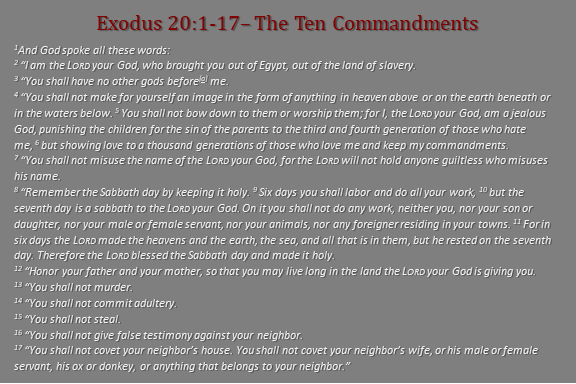
Exodus 20:1-17– The Ten Commandments

1And God spoke all these words:
“I am the Lord your God, who brought you out of Egypt, out of the land of slavery.
“You shall have no other gods before me.
“You shall not make for yourself an image in the form of anything in heaven above or on the earth beneath or in the waters below. You shall not bow down to them or worship them; for I, the Lord your God, am a jealous God, punishing the children for the sin of the parents to the third and fourth generation of those who hate me, but showing love to a thousand generations of those who love me and keep my commandments.
“You shall not misuse the name of the Lord your God, for the Lord will not hold anyone guiltless who misuses his name.
“Remember the Sabbath day by keeping it holy. Six days you shall labor and do all your work, 10 but the seventh day is a sabbath to the Lord your God. On it you shall not do any work, neither you, nor your son or daughter, nor your male or female servant, nor your animals, nor any foreigner residing in your towns. 11 For in six days the Lord made the heavens and the earth, the sea, and all that is in them, but he rested on the seventh day. Therefore the Lord blessed the Sabbath day and made it holy.
12 “Honor your father and your mother, so that you may live long in the land the Lord your God is giving you.
13 “You shall not murder.
14 “You shall not commit adultery.
15 “You shall not steal.16 “You shall no
t give false testimony against your neighbor.
17 “You shall not covet your neighbor’s house. You shall not covet your neighbor’s wife, or his male or female servant, his ox or donkey, or anything that belongs to your neighbor.”

Books of the Bible Overviews

Book of Genesis Overview

Key facts about the Book of Genesis

  • Author:  Moses
  • Date Written:  1450 – 1410 BC
  • Original Audience:  People of Israel
  • Geographical Location:  Middle East
  • Purpose: To record God’s creation of the world and the beginning of the Hebrew people (Israelites), whom God chose to set apart to worship Him and to be a witness for him in the world.
  • Note:  the names of people in the Bible are descriptive of who they are.  God sometimes renamed people – Abram to Abraham, Sarai to Sarah, Jacob to Israel.  That is where the name Israel comes from.

High-Level Outline of Genesis

  1. Story of Creation (1:1-2:3)
  2. The Fall and Repercussions (2:4-5:32)
  3. The Flood and its Aftermath (6:1-11:32
  4. The Story of Abraham (12:1-25:18)
  5. The Story of Isaac (25:19-28:9)
  6. The Story of Jacob, Rachel and Leah, and Jacob’s 12 sons (28:10-36:43)
  7. The Story of Joseph (one of Jacob’s 12 sons) and how Jacob’s whole family ended up in Egypt

Key Verses in Genesis

Genesis 2:24 God instituted the marriage relationship. “That is why a man leaves his father and mother and is united to his wife, and they become one flesh.”  Note that the word translated “wife” in this verse is אִשָּׁה, phonetically pronounced “ish-shaw.” This word means woman, wife, female.  In other words, the same exact word for wife is the same word for female.  This is true of the Greek word for woman/wife in the New Testament, as well.  Context is the key to understand whether the passage means “woman” or “wife”.  The important point is, however, that because the same word is used for both, it means that a wife is always a biological female according to God’s perfect design.

HEBREW
ishshah: woman, wife, female
Original Word: אִשָּׁה
Part of Speech: Noun Feminine
Transliteration: ishshah
Phonetic Spelling: (ish-shaw’)
Definition: woman, wife, female
(from Biblehub.com)
GREEK
guné: a woman
Original Word: γυνή, αικός, ἡ
Part of Speech: Noun, Feminine
Transliteration: guné
Phonetic Spelling: (goo-nay’)
Definition: a woman
Usage: a woman, wife, my lady.

Genesis 3:20 – Hebrew words are often much more meaningful than we realize and lose some of that meaning when translated into English – Adam and Eve, for example. (from Strong’s Concordance on Biblehub.com)

The Hebrew word translated Adam means “man, mankind”

Original Word: אָדָם
Part of Speech: Noun Masculine
Transliteration: adam
Phonetic Spelling: (aw-dawm’)
Definition: man, mankind

The Hebrew word translated Eve means “’life’, the first woman”

Original Word: חַוָּה
Part of Speech: Proper Name Feminine
Transliteration: Chavvah
Phonetic Spelling: (khav-vaw’)
Definition: “life”, the first woman

Genesis 9:5-6 God demands an accounting for taking anyone’s life.  God makes it abundantly clear in these verses that no one is to take another life.  Since he also has said that he personally has knit us together in our mother’s wombs, that would include human fetuses.  “For you created my inmost being; you knit me together in my mother’s womb.  I praise you because I am fearfully and wonderfully made; your works are wonderful, I know that full well. My frame was not hidden from you when I was made in the secret place, when I was woven together in the depths of the earth. Your eyes saw my unformed body; all the days ordained for me were written in your book before one of them came to be.” (Psalm 139:13-16)

Genesis 9:7-17 God’s Covenant with Noah – the rainbow.  God covenants with Noah never again to destroy all living things by flood.  This is a unilateral covenant – God requires nothing of Noah.   The sign of the covenant God gives is the rainbow.  So whenever you see a rainbow, remember what it truly stands for.   

Genesis 12:1-3 God makes a promise to Abram.  Here God calls Abram and tells him to leave everything and go to a country that God will show him.  God makes a promise to Abram that he will make him into a great nation and bless him and that all the peoples of the earth will be blessed through him.  God also says that he will bless whoever blesses Abram and curse whoever curses Abram.  This promise has never been rescinded and is in effect today.  

Clearly God is alluding to the future Messiah, Jesus.  But he has blessed all the peoples of the earth through the Jews in other significant ways through their contributions to medicine, science, technology, the arts, and every category of human endeavor.   (For specifics, see https://www.jinfo.org/.)  

Genesis 45:5-8a It was God who sent Joseph to Egypt.  “Then Joseph said to his brothers, “Come close to me.” When they had done so, he said, “I am your brother Joseph, the one you sold into Egypt! And now, do not be distressed and do not be angry with yourselves for selling me here, because it was to save lives that God sent me ahead of you.  For two years now there has been famine in the land, and for the next five years there will be no plowing and reaping.  But God sent me ahead of you to preserve for you a remnant on earth and to save your lives by a great deliverance. “So then, it was not you who sent me here, but God.”

Genesis 49:10-12 Jacob’s blessing of his son, Judah, is a messianic prophecy about the Messiah being from the tribe of Judah.

10 The scepter will not depart from Judah,
    nor the ruler’s staff from between his feet,
until he to whom it belongs shall come
    and the obedience of the nations shall be his.
11 He will tether his donkey to a vine,
    his colt to the choicest branch;
he will wash his garments in wine,
    his robes in the blood of grapes.
12 His eyes will be darker than wine,
    his teeth whiter than milk.

Weekly Highlights

Week 4: Exodus 16 – 36

This week narrates the continuing journey to the Promised Land, the giving of the 10 Commandments, and specifications for the Tabernacle and priests.

Key people this week:

  • Moses
  • Aaron
  • Jethro, Moses’ father-in-law
  • Joshua

Key events this week:

  • The people continue to grumble when they come up against a seeming obstacle – this time a lack of food – as if God wouldn’t provide.  They continue to look back to their life in Egypt, forgetting the harshness of their slavery, and remembering only the good things about it.  Not trusting God will be a continuing theme.  Paul said that these things were written “to teach us, so that through the endurance taught in the Scriptures and the encouragement they provide we might have hope,” (Romans 14:4).
  • God provided quail to eat in the evening and manna in the morning with instructions to gather only what they needed for that one day except the 6th day when they could gather enough for the Sabbath, as well.
  • The Sabbath is instituted.
  • God provides water from a rock.
  • The Israelites, led by Joshua, defeat the Amalekites – winning as long as Moses kept his hands up.
  • Jethro, Moses’ father-in-law advises Moses to set up a hierarchy of judges over the people, bringing only the difficult cases to Moses, so he would not be worn out.
  • God gave the Law, the 10 Commandments, written on tablets of stone to Moses on Mt. Sinai.
  • God provided additional instructions on idols, altars, Hebrew servants, personal injuries, protection of property, social responsibility, justice and mercy, the Sabbath.
  • God instituted three annual festivals.  These are the three festivals of the year that all Hebrew men had to appear before the Lord – the ones that later they would have to go to Jerusalem to celebrate.
    • Festival of Unleavened Bread (Immediately follows Passover),
    • Festival of Harvest (first fruits),
    • Festival of Ingathering (end of harvest). 
  • God specifies the borders of the Promised Land (Ex. 23:31).
  • God confirms the Covenant.
  • God provides instructions for constructing the Tabernacle and its furnishings, including the Ark of the covenant.
  • Aaron and his sons set apart and consecrated as priests plus description of the priestly garments.
  • The infamous Golden Calf incident.  Moses was so mad that he smashed the tablets with the 10 Commandments.  [Did I select the photo of the Golden Calf on Wallstreet on purpose?  Yes.]
  • Moses pitches the “tent of meeting” outside the camp for anyone who wanted to inquire of the Lord.
  • Moses asked the Lord, “Show me your glory,” (Ex. 33:18).
  • Moses goes up on the mountain again and God gives him new stone tablets.
  • God chose men with great skill to build the tabernacle – Bezalel and Oholiab – and the tabernacle was constructed.